
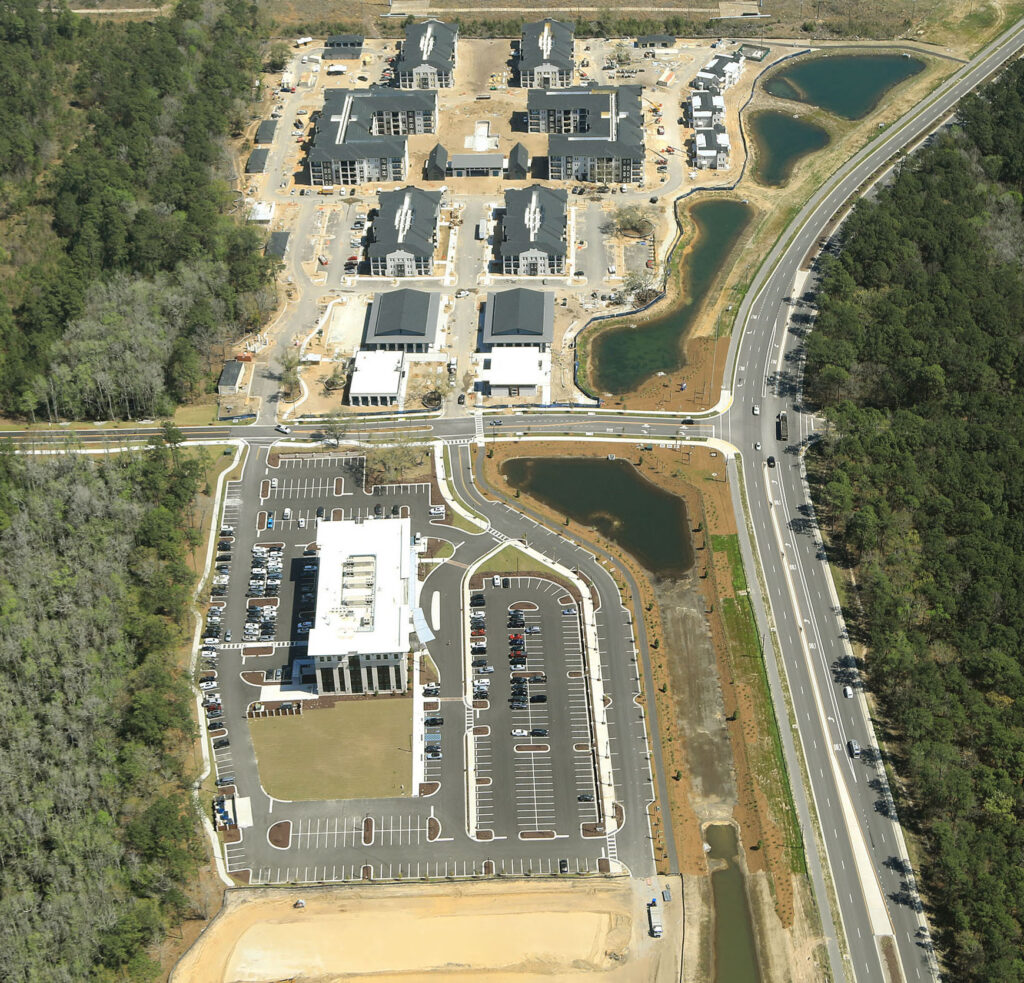
At Point Hope, planning began years ago, ensuring the community evolves with intention and the formation of a mutualistic relationship between the land and thoughtful development. Our pond and water features are no exception. While they add beauty and character throughout the community, they also play an important role in supporting responsible land and water management.
Living in the Lowcountry means living alongside water, and thoughtful planning is essential to protecting both people and the environment. Throughout Point Hope, a network of retention and detention basins helps manage rainfall by collecting and slowing runoff from roads, rooftops and shared spaces. These systems are designed to work with the natural landscape, helping reduce erosion and supporting the health of nearby creeks, marshes and waterways.
Many of these water features also include littoral shelves, gently sloped, planted areas along the shoreline that act as natural filters. These shelves allow native vegetation to absorb excess nutrients, trap sediments, stabilize shorelines and improve water quality before water gradually moves through the system. They also create valuable habitat for birds, pollinators and other wildlife that call the Lowcountry home.
At Point Hope, infrastructure and conservation work hand in hand. Along the Waterline, these ponds are intentionally placed as prominent landscape features rather than hidden behind homes or tucked away at the edges of neighborhoods, as is often the case in traditional development. The Waterline is planned as a linear park that will run along the stormwater frontage on Clements Ferry Road. Soon to become a regional recreational and retail destination, this thoughtfully laid out park is being created to enhance views, create a stronger connection to nature and contribute to the overall character of the community while continuing to play an important role in environmental function.
Together with trails, preserved green spaces and natural areas, these water features can help create a landscape that feels connected to the history and ecology of the Cainhoy peninsula. They invite residents to slow down, enjoy the view and experience their surroundings in a meaningful way.
As Point Hope continues to evolve, these systems will remain an important part of the community’s long-term vision, one rooted in stewardship, sustainability and deep respect for the land. We believe caring for the environment is not a single initiative, but an ongoing commitment reflected in the choices we make every day. It’s one more way Point Hope is becoming a place designed to thrive for generations to come.